

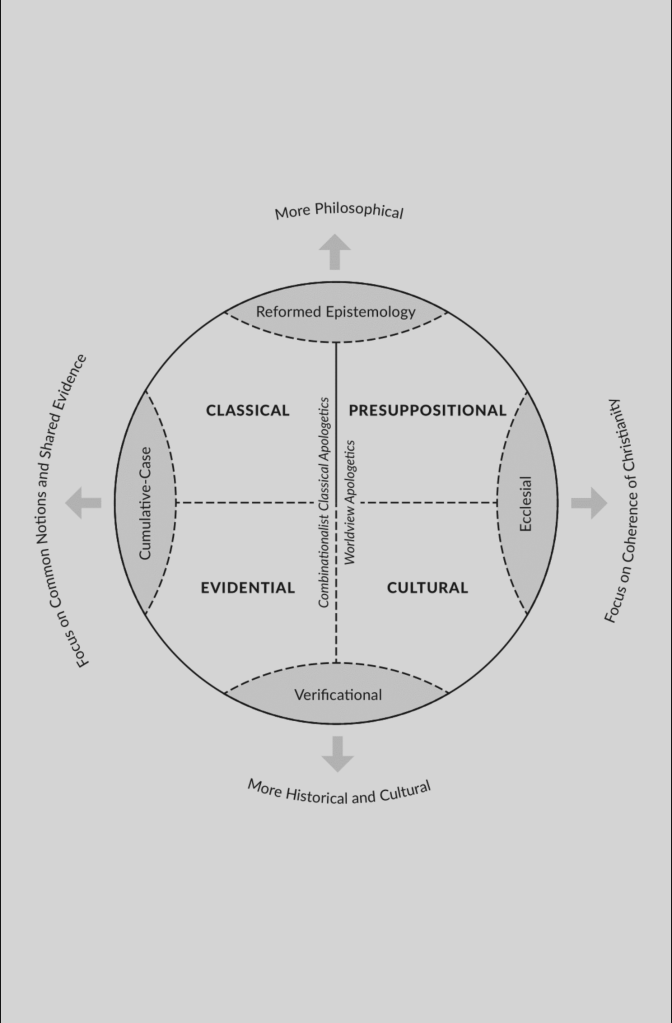
[This is from the Introduction, authored by Timothy Paul Jones, to Understanding Christian Apologetics: Five Methods for Defending the Faith.] Jones identifies and defines four primary perspectives for doing apologetics:
Classical Apologetics is defined as the “Two-step method that appeals to arguments from reason and nature to establish God’s existence and then defends Christian doctrines based on historical evidences. In traditional modern forms of classical apologetics, proofs for theism precede any appeals to miracles because, unless God exists, there is no reason to think that a miracle can occur. Modern proponents include Norman Geisler, R. C. Sproul, and Peter Kreeft.”
Evidential Apologetics is defined as the “One-step method that argues for the truth of Christianity and the existence of God through direct appeals to historical evidences that support miracles and fulfilled prophecies, with a particular emphasis on historical evidences for the resurrection of Jesus. Modern proponents include John Warwick Montgomery, Gary Habermas, and Josh McDowell.”
Presuppositional Apologetics is defined as the “Method that holds that the fundamental disagreement between Christians and non-Christians lies not at the level of differing facts or evidences but at the level of competing presuppositions about ultimate reality and ultimate authority. Christianity provides the only coherent explanation for human rationality. Cornelius Van Til was a prominent pioneer of modern presuppositionalism. More recent proponents include Greg Bahnsen and K. Scott Oliphint.”
Cultural Apologetics is defined as the “Method that responds to critiques and inquiries about the historical Christian faith by using cultural expressions and artifacts to reveal human idolatries and to redirect human affections to Jesus by demonstrating how the story of Jesus fulfills yet subverts cultural ideals. Imaginative apologetics and narrative apologetics are types of cultural apologetics. Contemporary proponents include Tim Keller and Christopher Watkin.”
Jake Falcone created this map of the apologetics methods based on content and lectures by Timothy Paul Jones . . .
 Christian Apologetics
Leave a comment