

Here is a pertinent word on the church and politics from church historian Michael A.G. Haykin
Michael Haykin, 29 Mar 2026
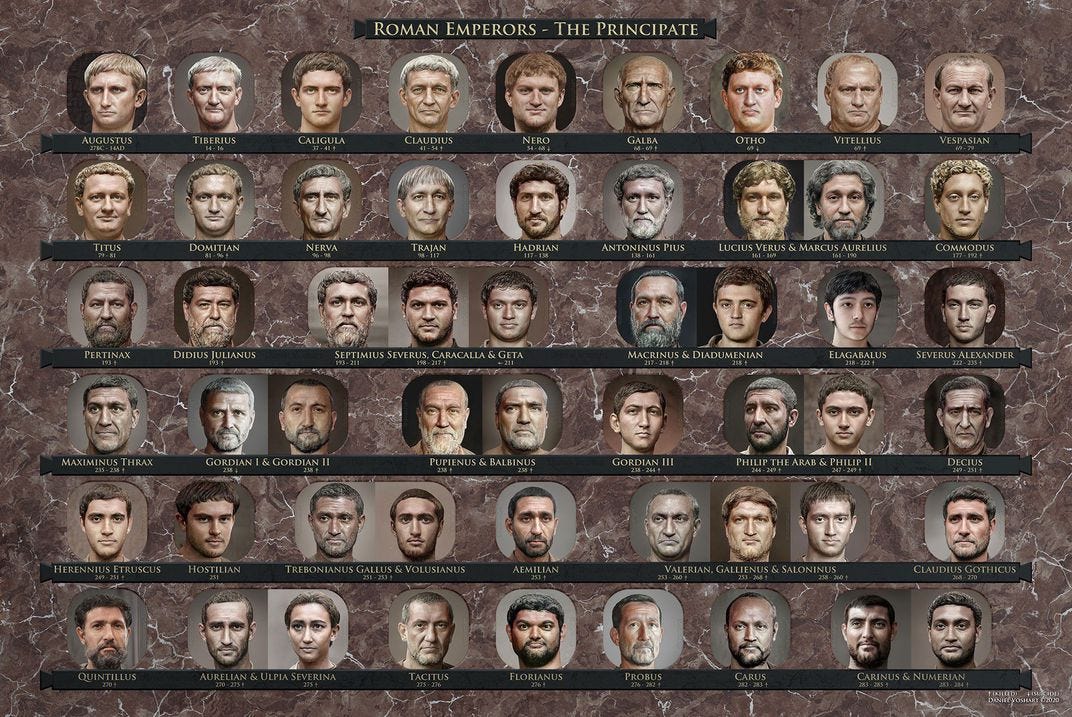
What has always struck me as an historian of late Antiquity and a lover of Greek and Roman history since I was 5 or 6, is how few major political figures from the 1st century AD are in the NT: Augustus Caesar (once in Luke), Claudius (once in Acts), Gallio—the younger brother of Seneca—in Acts 18—maybe Nero by implication in 2 Tim 4 (“the mouth of the lion”). Two persons who do come in for much mention, of course, are Herod and his Roman counterpart, Pontius Pilate. But surely that is due to their role in salvation history; they are not their because the NT is fascinated with the political issues of 1st century Palestine.
Unlike the OT, which is deeply invested in the politics of the Near Eastern milieu, the NT says virtually nothing about the “big men” of its milieu.
Romans 13 and 1 Tim 2 bear on politics of course (obedience to the powers that be and praying for them); honouring them in 1 Peter 2; recognizing their deep-seated idolatry in Revelation; paying taxes (“Give to Caesar what is Caesar”); Herod castigated as a fox and the Baptist’s public criticism of Herod’s lechery (one wonders what he would say about some recent Anglophone rulers?).
What is my point here? Two things:
1) There is a significant discontinuity between the OT and the NT when it comes to how God’s people relate to politics, a discontinuity that becomes blurred when the Roman emperors embrace the Gospel and flattened when the Carolingians turn to the OT for guidance on how to run Christendom (and that turn is still dogging the Reformers seven hundred years later and many of their Puritan heirs—it is only when the revivals take place in the long 18th century, that we start to see something quite different); the NT is simply not overly concerned about politics.
2) The NT is concerned about the preaching of the Gospel; the inner life of the church and its piety; the doing of good works in the world; and mission to the lost. In other words what some derogatorily call PIETISM today. And in doing so, the latter have returned to the mindset of the medieval world with its “Christian” wars and execution of “heretics.” I understand why some Christian traditions that flatten the differences between the covenants would embrace a model that smacks of Christendom, but, for the life of me, I cannot see why Baptists, whose lifeblood has been grounded in the realities of the new covenant, would find any sort of return to a Christendom II appealing.
This does not mean that I would discourage Christian participation in the public square: far from it. Anyone who knows me knows I value highly Christian presence throughout the entirety of public life—in bakeries and taxis, in parliaments and law courts, in museums and art galleries, in poetry readings and in zoos. But such witness to the glory of God is all of these realms is a far cry from the theonomic vision that some Christians entertain today.
 Christian Apologetics
Leave a comment