

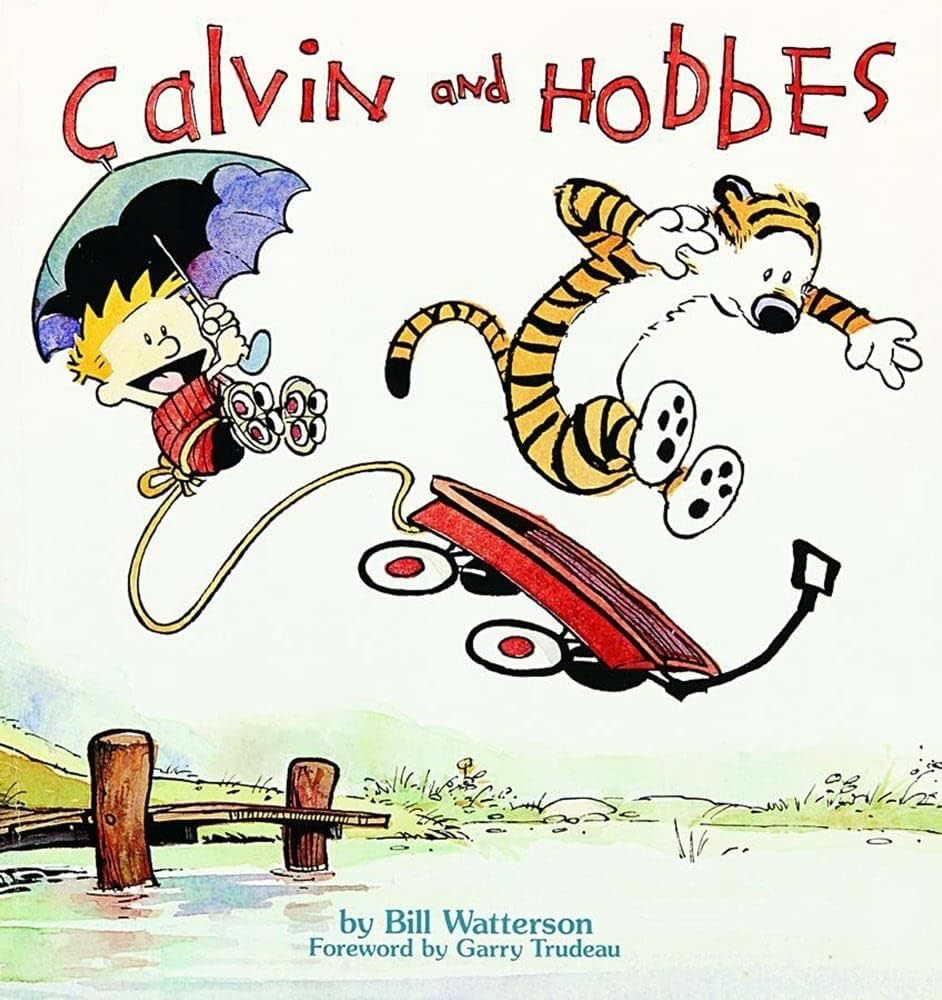
Calvin and Hobbes was the greatest comic strip ever written. When Bill Watterson ceased producing it in 1995, I was so upset that I started a nationwide boycott of all comic strips in an attempt to convince Watterson to resume. Alas though, while I still boycott all the comics today, my nationwide boycott was unsuccessful . . . perhaps because I was never able to convince anyone else to join me. 🙂
Ecclesiastes 3:4 states there is “a time to weep and a time to laugh.” Laughter is in short supply these days. Proverbs 17:22 states, “A cheerful heart is good medicine, but a crushed spirit dries up the bones,” emphasizing the health benefits of laughter. Jesus says in Luke 6:21, “Blessed are you who hunger now, for you will be satisfied. Blessed are you who weep now, for you will laugh.” Most of what supposedly passes for comedy today is obscene and designed to shock more than appeal to a sense of humor. Consider how the vast majority of films marketed as comedy today are rated R. And keep in mind that an R rating in 2026 is nothing like an R rating 30 years ago. (Even PG-13 comedies today are increasingly filled with obscenities.)
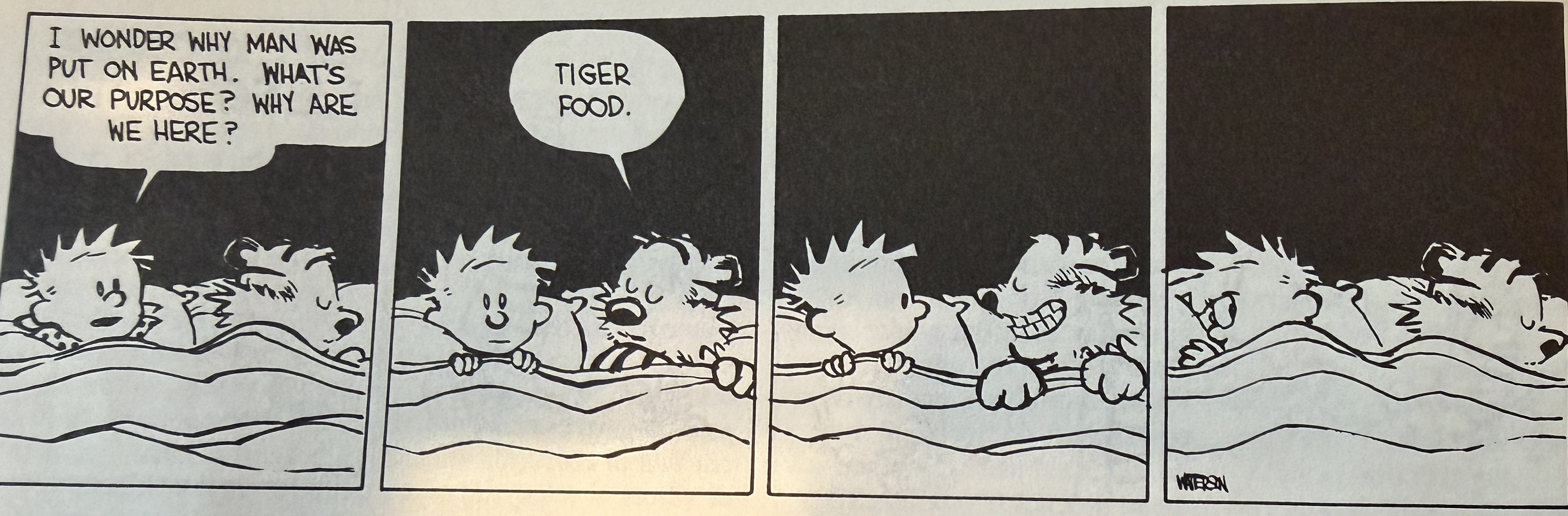
In 2011, First Things hosted an extract from an article here entitled “The Theology of Calvin and Hobbes”. The complete compendium, consisting of a series of articles, is here and worth reading in entirety. This Christmas, I asked my wife to gift me with the complete set of all Calvin & Hobbes comics so I can enjoy genuine, clean, wholesome and funny humor – an increasingly rare commodity today. I intend to read a few strips every day to help keep my sanity amidst a culture descending into wonderland.
“Calvin and Hobbes is best read as posing theological questions rather than providing answers. One of the themes of Calvin and Hobbes is Calvin’s continual confrontation with epistemic horizons. He is often attempting to forecast the future while rushing, with Hobbes, headlong down a hillside in a wagon. He is continually terrorized by what lives under his bed. These are not theological propositions but they speak to our theological situation.“


Leave a Reply